
Does God Dwell in Darkness? The Biblical Truth Behind God's Hidden Glory
Does God Dwell in Darkness? Discover what Genesis, Sinai, the Temple, Calvary, and 1 John reveal about God's hidden glory and His perfect light.
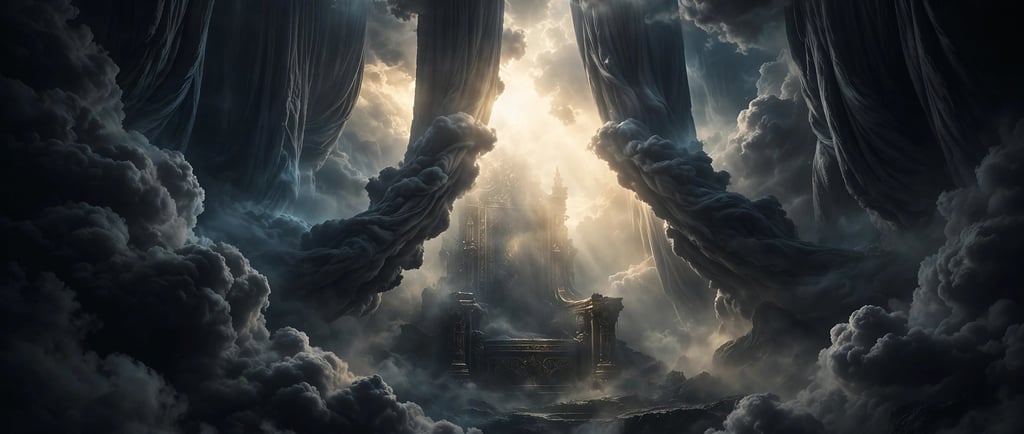
Many Christians picture God surrounded by endless light, majestic angels, and the beauty of heaven. The Bible certainly teaches that God is glorious, holy, and radiant. Yet there is another truth that often surprises readers.
Several passages say God revealed Himself from thick darkness.
At first glance, that seems impossible.
How can God dwell in darkness if the Bible also declares, "God is light; in Him there is no darkness at all" (1 John 1:5)?
Is the Bible contradicting itself?
Or are these passages revealing something deeper about God's glory?
The answer is found by allowing Scripture to explain Scripture.
From the opening verses of Genesis to Mount Sinai, from the Psalms to Solomon's Temple, and finally to Calvary, the Bible presents a remarkable pattern. Again and again, God chooses to reveal His presence from places covered in thick darkness. Yet the same Bible never says darkness is His nature. Instead, it points to darkness as a veil surrounding His overwhelming holiness.
This study follows that pattern step by step. Rather than relying on speculation or tradition, every conclusion is built directly from the biblical text.
By the end, you will see why the Bible can truthfully say that God revealed Himself from thick darkness while also declaring that He is perfect light.
Does God Dwell in Darkness According to the Bible?
The short answer is both yes and no, depending on what we mean.
If we mean that darkness is God's character, the answer is no.
Scripture is clear.
Psalm 27:1 calls the Lord our light and our salvation.
First John 1:5 declares that God is light and contains no darkness at all.
Darkness does not describe His nature.
However, if we ask whether God often revealed His presence from thick darkness, the answer is clearly yes.
This theme appears repeatedly throughout Scripture.
God's Spirit was present before light appeared in creation.
God met Moses in thick darkness on Mount Sinai.
David described darkness as God's covering.
Solomon declared that the Lord dwelt in thick darkness when the Temple was dedicated.
During the crucifixion of Jesus, darkness covered the land as the greatest work of redemption unfolded.
These events are not random.
Together they reveal a consistent biblical pattern.
Whenever God's glory exceeded what people could bear, His presence was often hidden behind a veil.
That veil was frequently described as thick darkness or cloud.
The darkness was never the destination.
It was the covering surrounding God's indescribable glory.
Understanding this distinction changes how we read many familiar passages.
Instead of seeing darkness as proof that God is absent, we begin to recognize that it sometimes points to His hidden majesty.
What Is the Difference Between God's Nature and God's Covering?
This distinction is essential.
The Bible uses symbols carefully.
Fire represents God's holiness.
Water often represents cleansing.
Bread represents life.
Light represents God's perfect character.
Darkness, however, often represents something different when connected to God's presence.
It represents concealment.
Imagine trying to stare directly at the sun.
Its brilliance is too great for human eyes.
The problem is not the sun.
The problem is our limited ability to look upon its glory.
The same idea appears throughout Scripture.
God's holiness is beyond human comprehension.
Rather than exposing His full glory, He often concealed it behind cloud, smoke, or thick darkness.
This protected those who approached Him while still allowing them to experience His presence.
The darkness was not hiding evil.
It was shielding overwhelming holiness.
That truth prepares us for the first pages of the Bible.
Does God Dwell in Darkness Before Creation?
The Bible's opening scene immediately challenges many assumptions.
Before there were mountains...
Before oceans were filled with life...
Before the stars decorated the heavens...
Before the sun gave light to the earth...
There was darkness.
Genesis 1:2 says:
"The earth was without form and void, and darkness was over the face of the deep. And the Spirit of God was hovering over the waters."
Notice what the verse does not say.
It does not say God arrived after light appeared.
Instead, the Spirit of God was already present before God spoke the words, "Let there be light."
This detail is easy to overlook, but it is deeply significant.
Darkness did not prevent God's presence.
His Spirit moved freely over the waters before creation was fully ordered.
This does not mean darkness defined God.
Rather, it shows that God is completely sovereign over darkness.
He is never limited by it.
He is never threatened by it.
He existed before light illuminated the universe.
When God later created light, He was not creating something He lacked.
He was bringing order to creation and establishing the rhythm of day and night.
Genesis therefore introduces an important principle that continues throughout Scripture.
Where human eyes see darkness, God is already present and at work.
That pattern will become even clearer at Mount Sinai.
What Does Genesis 1:2 Actually Mean?
Many people assume Genesis presents darkness as something evil.
The text itself never says that.
Darkness existed because light had not yet been spoken into creation.
The focus of the passage is not the darkness.
The focus is God's active presence.
The Spirit hovers over the waters like a master artist preparing a masterpiece.
Nothing is out of control.
Nothing surprises Him.
Creation waits for His command.
Then, with absolute authority, God speaks.
"Let there be light."
Light appears instantly.
Darkness never resists Him.
It simply gives way to His word.
That same truth offers hope today.
There are seasons when life feels empty, uncertain, or silent.
Genesis reminds us that God's work often begins long before we can see it.
His presence does not depend on visible answers.
He is already at work before the dawn arrives.
Does God Dwell in Darkness at Mount Sinai?
If Genesis introduces the pattern, Mount Sinai makes it impossible to ignore.
Israel had just experienced one miracle after another.
God broke Pharaoh's power.
He divided the Red Sea.
He provided water from a rock.
He rained bread from heaven.
Now the nation stood before Mount Sinai to enter into covenant with the living God.
The mountain shook violently.
Thunder echoed through the wilderness.
Lightning split the sky.
Smoke rose from the mountain like a blazing furnace.
The sound of a heavenly trumpet grew louder and louder.
Every person in the camp trembled.
This was not simply a dramatic display of power.
It was a revelation of God's holiness.
Then Scripture records one of the most remarkable statements in the Old Testament.
Exodus 20:21 says:
"The people remained at a distance, while Moses approached the thick darkness where God was."
Those final words deserve careful attention.
The Bible does not say Moses entered darkness hoping God would appear.
It says he entered the thick darkness where God was.
That single verse answers part of our question.
God chose to reveal His presence from within thick darkness.
Why?
Because His glory could not be fully exposed to sinful humanity.
The darkness functioned like a veil.
It concealed the overwhelming brilliance of God's holiness while allowing Moses to approach His presence.
This is the same God who later revealed Himself as light.
Nothing about His character changed.
What changed was the way He chose to reveal Himself.
The cloud and darkness protected Israel from seeing what they could not endure.
Instead of proving God's absence, the darkness testified to His nearness.
The people could not see Him clearly.
Yet He was closer than ever.
This truth still speaks today.
There are seasons when God seems hidden.
Prayers appear unanswered.
The future feels uncertain.
Yet Sinai reminds us that hiddenness is not the same as absence.
God may be nearer than we realize.
Sometimes His greatest works begin behind a veil we cannot yet understand.
Why Did Moses Enter the Thick Darkness?
Moses entered because God called him.
That detail matters.
The journey into the darkness was not reckless curiosity.
It was an act of obedience.
Every step Moses took required trust.
He could not rely on sight alone.
He walked toward the place where God had revealed Himself.
Throughout Scripture, faith often requires moving forward before every answer becomes visible.
Abraham left his homeland without knowing his destination.
Joshua stepped into the Jordan before the waters parted.
Peter stepped out of the boat before experiencing the miracle.
Likewise, Moses entered the thick darkness because he trusted the One who called him.
The darkness did not remove God's presence.
It revealed that God's majesty was greater than human understanding.
When believers encounter seasons of uncertainty, Sinai offers an important lesson.
Faith is not the absence of questions.
Faith is confidence in God's character even when His ways remain hidden.
Does God Dwell in Darkness in the Psalms?
Centuries after Moses, King David reflected on God's majesty using striking language.
In Psalm 18:11, he wrote:
"He made darkness His covering, His canopy around Him—the dark rain clouds of the sky."
Notice David's wording.
He does not say darkness is God's identity.
He says darkness is His covering.
A covering hides what lies behind it.
It protects.
It conceals.
It draws attention to the greatness of what cannot yet be fully seen.
David understood that finite human beings cannot fully comprehend an infinite God.
The Lord's glory is so overwhelming that it must be veiled.
This picture becomes even clearer in Psalm 97:2:
"Clouds and thick darkness surround Him; righteousness and justice are the foundation of His throne."
These two truths belong together.
Clouds and thick darkness surround Him.
Righteousness and justice support His throne.
The darkness never hides evil.
It hides glory.
The throne hidden behind the clouds is still founded on perfect righteousness.
The God concealed by mystery remains completely holy.
This balance protects us from two common mistakes.
One mistake is believing darkness itself is divine.
The other is assuming every mystery means God is absent.
The Psalms reject both ideas.
Instead, they teach that God's greatness exceeds human understanding while His character remains perfectly good.
David had experienced many dark seasons.
He fled from Saul.
He hid in caves.
He endured betrayal and grief.
Yet even during those years, he learned that God's faithfulness never depended on visible circumstances.
That is why he could confidently declare later:
"The Lord is my light and my salvation; whom shall I fear?" (Psalm 27:1)
The same man who wrote about God's covering also proclaimed that God is his light.
There is no contradiction.
Darkness describes the veil.
Light describes the One behind the veil.
Why Does David Describe Darkness Around God?
David wanted readers to understand the difference between mystery and character.
God's ways are sometimes beyond human understanding.
His wisdom reaches further than ours.
His timing often surprises us.
His plans unfold over generations.
That mystery is symbolized by clouds and thick darkness.
Yet God's character never changes.
His throne remains established on righteousness and justice.
Every decision He makes is perfectly holy.
Every promise He gives is completely trustworthy.
David therefore encourages believers to trust what they know about God's character even when they cannot fully understand His methods.
That lesson remains just as important today.
There will always be questions we cannot answer.
There will always be seasons when God's purposes remain hidden.
But behind every cloud stands the same faithful God who revealed Himself to Moses, guided Israel through the wilderness, and sustained David through every trial.
His glory may be veiled.
His goodness never is.
Does God Dwell in Darkness in Solomon's Temple?
The pattern that began in Genesis and continued at Mount Sinai appears again during one of the most significant moments in Israel's history.
The Temple had finally been completed.
For generations, Israel had worshiped God in the Tabernacle, a movable sanctuary that traveled with the people through the wilderness. Now, under King Solomon, a permanent house had been built for the Lord in Jerusalem.
The finest materials had been gathered.
The priests stood ready.
The Ark of the Covenant had been brought into the Most Holy Place.
Everything was prepared for the dedication.
Then something extraordinary happened.
The glory of the Lord filled the Temple.
Elsewhere in Scripture, this glory is described as a cloud so overwhelming that the priests could not continue their ministry because of the Lord's presence (1 Kings 8:10–11). The cloud was not empty. It announced that God had come to dwell among His covenant people.
At that moment, Solomon declared:
"The Lord has said that He would dwell in thick darkness." (1 Kings 8:12)
Years later, during another dedication, the same declaration was repeated almost word for word in 2 Chronicles 6:1.
This was not a casual statement.
It was a theological truth rooted in Israel's history.
Solomon was pointing back to Mount Sinai, where Moses entered the thick darkness where God was. He understood that the cloud filling the Temple represented the same holy presence that had led Israel through the wilderness.
The Lord had chosen to dwell among His people.
Yet His infinite glory remained beyond human comprehension.
The Temple was filled with God's presence.
But it could never contain God Himself.
Later, Solomon acknowledged this reality when he prayed:
"But will God indeed dwell on the earth? Behold, heaven and the highest heaven cannot contain You, how much less this house that I have built!" (1 Kings 8:27)
That statement guards us from misunderstanding.
God's presence was genuinely in the Temple.
Yet the Creator of heaven and earth could never be confined to a building.
The thick cloud reminded Israel that God was both near and infinitely greater than anything they could imagine.
He welcomed His people into fellowship.
At the same time, He remained the sovereign King whose majesty surpassed all creation.
The darkness did not hide an absent God.
It concealed a glorious God.
Why Did Solomon Say God Dwells in Thick Darkness?
Solomon was teaching Israel something that remains important today.
People often want God to explain everything.
We want immediate answers.
We want every prayer answered according to our schedule.
We want every mystery removed.
But throughout Scripture, God often chooses another way.
He reveals enough for us to trust Him.
He does not reveal everything.
The cloud in the Temple became a visual reminder that faith is not built on seeing everything.
Faith rests on knowing the One who cannot fail.
Israel could not see every detail of God's glory.
Yet they knew He was present.
The same principle applies to believers today.
There are moments when God's plans remain hidden.
The future feels uncertain.
Questions remain unanswered.
Yet His promises remain unchanged.
The God who filled the Temple with His glory is still faithful even when His purposes are hidden behind the cloud.
His silence should never be confused with abandonment.
His mystery should never be mistaken for distance.
Does God Dwell in Darkness at the Cross?
The final and greatest example comes at Calvary.
Everything in the Bible has been moving toward this moment.
The eternal Son of God entered the world.
He healed the sick.
He gave sight to the blind.
He cleansed lepers.
He raised the dead.
He calmed storms with His voice.
He forgave sinners.
He declared:
"I am the Light of the world."
Then came the cross.
It seemed like history's darkest hour.
The One who had done no wrong was mocked, beaten, and nailed to a cross outside Jerusalem.
Crowds watched.
Soldiers gambled for His clothing.
Religious leaders celebrated what they believed was their victory.
Then something happened that no one expected.
Luke records:
"It was now about noon, and darkness came over the whole land until three in the afternoon." (Luke 23:44)
Think about that carefully.
Darkness arrived in the middle of the day.
Not before sunrise.
Not after sunset.
At noon.
When the sun should have been at its brightest.
Why?
The Bible does not present this darkness as a random event.
It was a sign.
Creation itself responded to what was taking place on the cross.
The sin of the world was being placed upon Christ.
The spotless Lamb of God was offering Himself for humanity's redemption.
Once again, just as at Sinai and in the Temple, God's greatest work unfolded beneath a veil.
The darkness declared that this was no ordinary execution.
Heaven and earth bore witness to the weight of redemption.
The same biblical pattern appears again.
Before creation, God was present in darkness.
At Sinai, Moses entered the darkness where God was.
David described darkness as God's covering.
Solomon declared that God dwells in thick darkness.
Now, at Calvary, darkness covers the land while God's greatest act of salvation is accomplished.
The pattern is too consistent to ignore.
Throughout Scripture, moments of profound divine activity are often accompanied by thick darkness.
Not because darkness defines God.
But because His glory, holiness, justice, and mercy are accomplishing something beyond human understanding.
Why Did Darkness Cover the Earth During the Crucifixion?
The darkness at the cross announced that history had reached its turning point.
This was not simply the death of another man.
It was the sacrifice foretold throughout the Old Testament.
Jesus willingly bore the penalty for sin.
Justice and mercy met at the cross.
The darkness emphasized the seriousness of sin.
It reminded humanity that redemption required the perfect sacrifice.
Yet even here, darkness did not have the final word.
Three days later, the tomb was empty.
The risen Christ conquered sin and death forever.
The One who entered humanity's deepest darkness emerged victorious.
Because He lives, those who trust in Him never face darkness alone.
Calvary therefore prepares us for the Bible's final answer.
Yes, God often revealed His presence from thick darkness.
But His ultimate purpose was always to bring people into His marvelous light.
The darkness was temporary.
The Light is eternal.
Does God Dwell in Darkness If God Is Light?
After tracing this pattern from Genesis to Calvary, one question remains.
If God repeatedly revealed His presence from thick darkness, why does the Bible also declare that He is light?
The answer lies in understanding the difference between God's nature and the way He sometimes reveals His presence.
The Bible never teaches that darkness is part of God's character.
Instead, it consistently presents light as one of the clearest pictures of who He is.
King David declared with confidence:
"The Lord is my light and my salvation—whom shall I fear?" (Psalm 27:1)
David had experienced fear, betrayal, warfare, loss, and uncertainty. Yet after everything he endured, he described God as his light.
Centuries later, the Apostle John made one of the clearest theological statements in all of Scripture:
"God is light; in Him there is no darkness at all." (1 John 1:5)
Notice how absolute that statement is.
John does not say God is mostly light.
He does not say light and darkness exist together within Him.
He says there is no darkness at all in God.
That truth settles the question of God's character forever.
So how do we understand the passages that describe thick darkness surrounding Him?
The answer is found in everything we have already seen.
The darkness is never presented as God's identity.
It is presented as His covering.
Just as clouds can hide the brilliance of the sun without changing the nature of the sun, thick darkness can veil God's overwhelming glory without changing who He is.
The cloud protects.
The darkness conceals.
The light remains unchanged.
This explains why the same Bible can truthfully say:
God was present before light appeared in Genesis.
Moses entered the thick darkness where God was.
David described darkness as God's covering.
Solomon declared that the Lord dwells in thick darkness.
Darkness covered the earth while Christ accomplished redemption.
God is light, and in Him there is no darkness at all.
These statements do not contradict one another.
Together they reveal a complete picture of God's majesty.
His glory is beyond human understanding.
His holiness is beyond comparison.
His character is perfect light.
What Does This Mean for Christians Today?
This truth is far more than an interesting Bible study.
It changes the way we understand our own lives.
There are seasons when God seems silent.
Prayers appear unanswered.
Doors remain closed.
The future feels uncertain.
Many people conclude that God has abandoned them simply because they cannot see what He is doing.
The Bible tells a different story.
Before creation was complete, God was already present.
At Mount Sinai, He was in the thick darkness.
In the Temple, His glory filled the cloud.
At Calvary, He was accomplishing salvation while darkness covered the land.
If God was present in each of those moments, why should we assume He is absent during ours?
Perhaps the season that feels darkest is the very place where God is quietly working.
Not because He enjoys suffering.
Not because darkness is good.
But because His faithfulness does not depend on what we can see.
Faith grows when sight is limited.
Hope shines brightest against the darkest background.
Trust becomes strongest when answers are delayed.
The Bible never encourages us to celebrate pain.
Instead, it encourages us to trust the God who remains faithful within it.
His presence is not measured by our emotions.
His faithfulness is not determined by our circumstances.
His promises do not change with the weather of life.
The God who met Moses still walks with His people.
The God who filled the Temple still keeps His promises.
The God who raised Jesus from the dead still brings light into the darkest places.
That is the hope of the gospel.
Conclusion
So, does God dwell in darkness?
The answer requires careful wording.
The Bible does not teach that darkness is God's nature.
It teaches that God is light.
Yet it also reveals that throughout history, God repeatedly chose to reveal His presence from places covered in thick darkness.
Genesis showed His Spirit present before light filled creation.
Mount Sinai showed Moses entering the thick darkness where God was.
David described darkness as God's covering.
Solomon declared that the Lord dwells in thick darkness.
Calvary revealed darkness covering the earth while redemption was accomplished.
Finally, the New Testament lifted the veil completely.
God is light.
In Him there is no darkness at all.
The darkness never defined Him.
It only concealed His indescribable glory.
That truth carries hope for every believer.
If you are walking through uncertainty...
If you cannot see what God is doing...
If your prayers seem to disappear into silence...
Remember the pattern of Scripture.
Do not mistake silence for absence.
Do not mistake mystery for abandonment.
Do not mistake darkness for defeat.
The God who was present before creation is present with you today.
The God who met Moses in the thick darkness still walks beside His children.
The God who brought resurrection after Calvary still brings hope after every night.
Hold on to Him.
Trust His promises.
The dawn is coming.
Because God is light, His light will shine upon your path.
Frequently Asked Questions
Does God dwell in darkness?
The Bible says God revealed His presence from thick darkness in several passages, including Exodus 20:21 and 1 Kings 8:12. However, Scripture also clearly teaches that God is light (1 John 1:5). The darkness represents the veil surrounding His overwhelming glory, not His nature.
Why did Moses enter the thick darkness?
Moses entered the thick darkness because God called him there (Exodus 20:21). The darkness symbolized God's hidden majesty and holiness rather than His absence.
Why was there darkness during Jesus' crucifixion?
Luke 23:44 records that darkness covered the land for three hours while Jesus was on the cross. This sign revealed the extraordinary significance of Christ's sacrifice and fulfilled the biblical pattern of God's greatest works occurring beneath a veil of mystery.
Is darkness evil in the Bible?
Not always. Darkness often symbolizes sin, judgment, or ignorance. However, when associated with God's presence in passages such as Exodus 20:21, Psalm 18:11, Psalm 97:2, and 1 Kings 8:12, it represents the hiddenness of His glory rather than evil itself.
What does 1 John 1:5 mean?
First John 1:5 declares that God is perfectly holy, righteous, and pure. There is no evil, sin, or moral darkness in His character.
Final Encouragement
If this study strengthened your faith, take a moment to share it with someone who may be walking through a difficult season.
Sometimes the greatest encouragement is simply reminding another believer that God has not abandoned them.
If you enjoy deeply researched, Bible-centered studies that allow Scripture to interpret Scripture, consider supporting this ministry.
Support on Ko-fi: https://www.givesendgo.com/support-global-evangelism-through-pray-?utm_source=share
Become a Patron: https://patreon.com/c/PrayatDawn/membership
Your support helps us continue producing in-depth biblical studies, visual resources, and faith-building content that points people back to God's Word.
May the Lord bless you, strengthen your faith, and remind you daily of this beautiful truth:
No matter how dark the night may seem, God is already there. Because He is Light, His light will always overcome the darkness.
